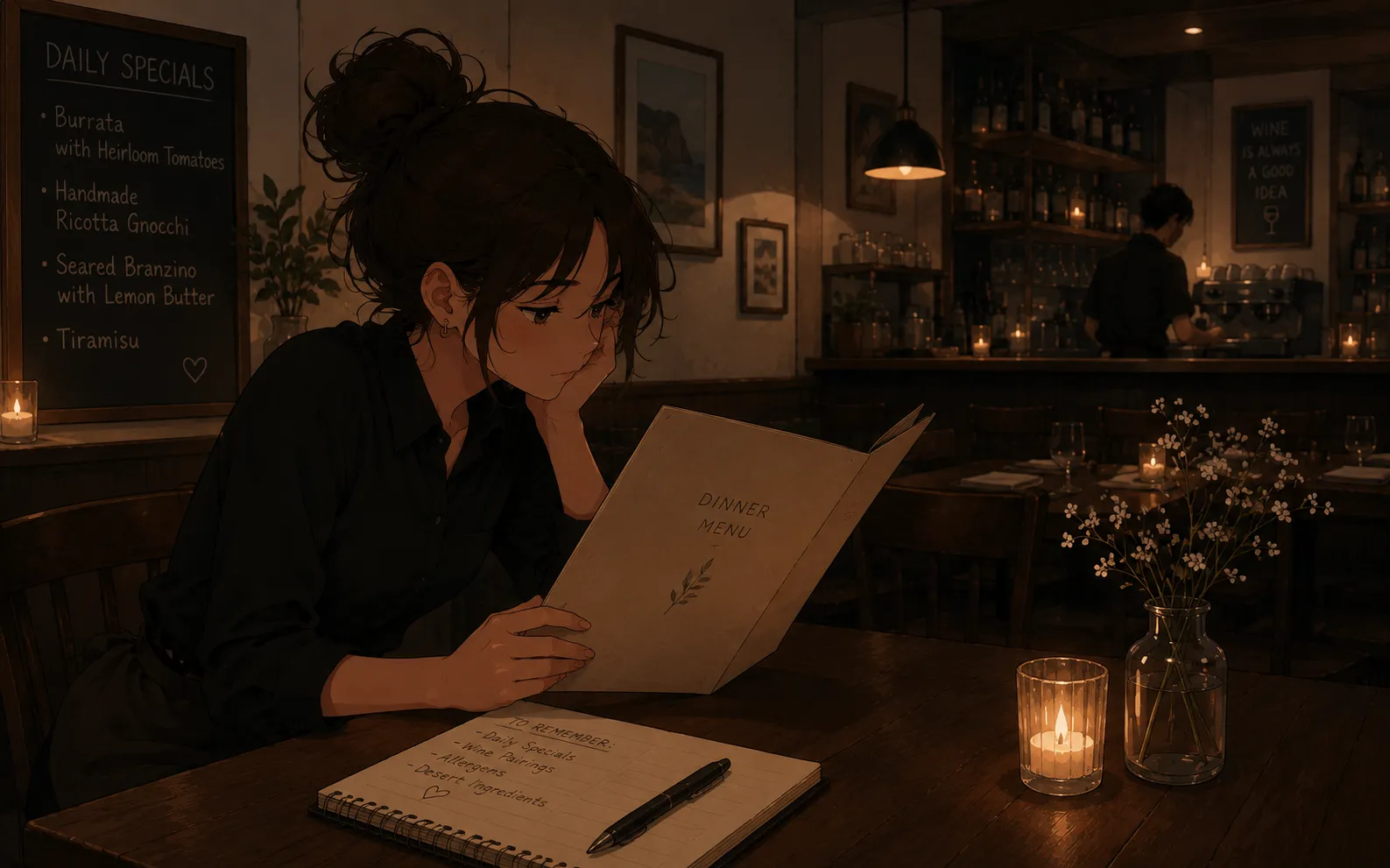
Mnemonics, acronyms, and little memory games do help you learn a cocktail list, but they make it easier, not effortless. The honest answer is that a clever trick fixes one drink in your head; learning the whole list still takes recall practice. The fastest path is to stop rereading the menu, turn it into flashcards, and quiz yourself, which is exactly the gap a tool like MenuFlashcards fills by building the deck from a photo. It is in early access on iPhone.
For the study method behind any of these tricks, see how to memorize a restaurant menu fast. This piece is about whether the memory games actually carry a cocktail list.
Do mnemonics actually work for a cocktail list?
They work, with a clear limit. A mnemonic gives a messy fact a handle, so a build you keep forgetting suddenly has a hook. The catch is volume: you can invent a vivid story for one drink, but you cannot story your way through forty. Mnemonics are best for the handful of cocktails that refuse to stick, not as a system for the whole menu. Use them as spot fixes and let recall practice cover the rest.
The acronym trick: lock in the build order
Acronyms are the most practical mnemonic behind a bar because a cocktail is a short, ordered list of ingredients. Take the first letter of each component in pour order and make a word or a phrase. A negroni is equal parts gin, Campari, and sweet vermouth, so “GCV, equal” is enough. A daiquiri is rum, lime, sugar. The acronym does not replace knowing the drink, it just keeps the order and the ratio from sliding around when you are busy. Build your own, because an acronym you invented is far stickier than one you copied.
Turn the bar into a memory palace
The oldest memory trick is the most useful one here: tie each drink to a place. A systematic review and meta-analysis of the method of loci found it produces a large improvement in recall compared with plain rehearsal. Walk your station in your head: the citrus drinks live by the fruit tray, the stirred classics by the spirit shelf, the espresso martini by the coffee machine. When an order lands, you mentally walk the route and the builds appear in order. It pairs well with the acronym trick, because the place reminds you which drink, and the acronym reminds you how to make it.
Why a memory “game” beats rereading
A memory game works for one reason: it forces recall. Rereading the list feels productive but only builds recognition, so the words still vanish when a guest is waiting. A review of the testing effect in the US National Library of Medicine shows that pulling an answer out of memory fixes it far better than reading it again. That is all a flashcard quiz is: a game that hides the answer and makes you produce it. Cover the build, say it out loud, then check.
Space the rounds out
Do not cram the whole list in one sitting. Research on the spacing effect shows the same amount of practice sticks much better split across short sessions than packed into one long block. Three ten-minute rounds across a day beat an hour of staring at the menu, and you can squeeze a final round in before your shift starts.
Which trick to use when
Each method has a job. Here is how they compare for a bartender learning a list on a deadline:
| Method | Best for | The limit |
|---|---|---|
| Acronyms | A single build’s order and ratio | One drink at a time, not the whole list |
| Memory palace | Recalling which drinks exist and grouping them | Takes setup; needs a familiar place |
| Flashcards and quizzes | Drilling the whole list to fast recall | You need the deck built first |
| Rereading the menu | A quick refresher | Builds recognition, not recall |
The pattern is clear: use mnemonics to rescue the stubborn drinks, and use a quiz to carry the rest. For the broader drink-list method, see memorizing the drinks menu for a bar job and, for non-alcoholic specs, learning mocktail recipes as a bartender.
A 20-minute drill
- Photograph the full drink list and let an app build and group the deck.
- Quiz one section at a time, building from the drink’s name the way an order comes.
- Flag the three drinks you keep missing and give each a quick acronym.
- Walk your memory palace once, placing each section at a station.
- Finish by saying five builds out loud, as if a guest were waiting.
Bottom line
Mnemonics, acronyms, and memory games make a cocktail list easier, not automatic. The tricks shine on the few drinks that refuse to stick, while a quiz that forces recall, spaced across short sessions, carries the rest. MenuFlashcards turns a photo of the list into that quizzable deck so you skip the manual setup. It is in early access, so join the list and start with the free deck when it opens.