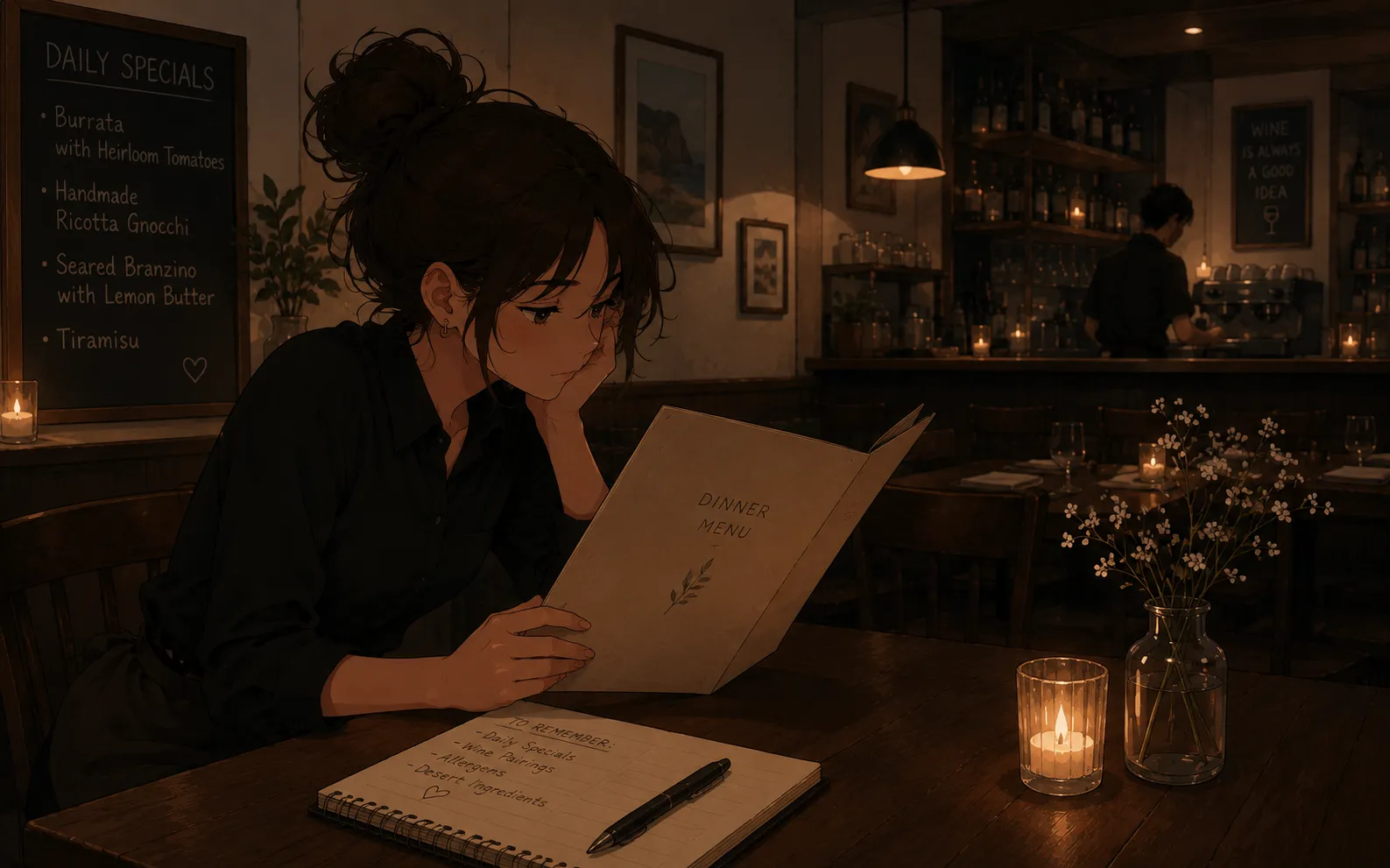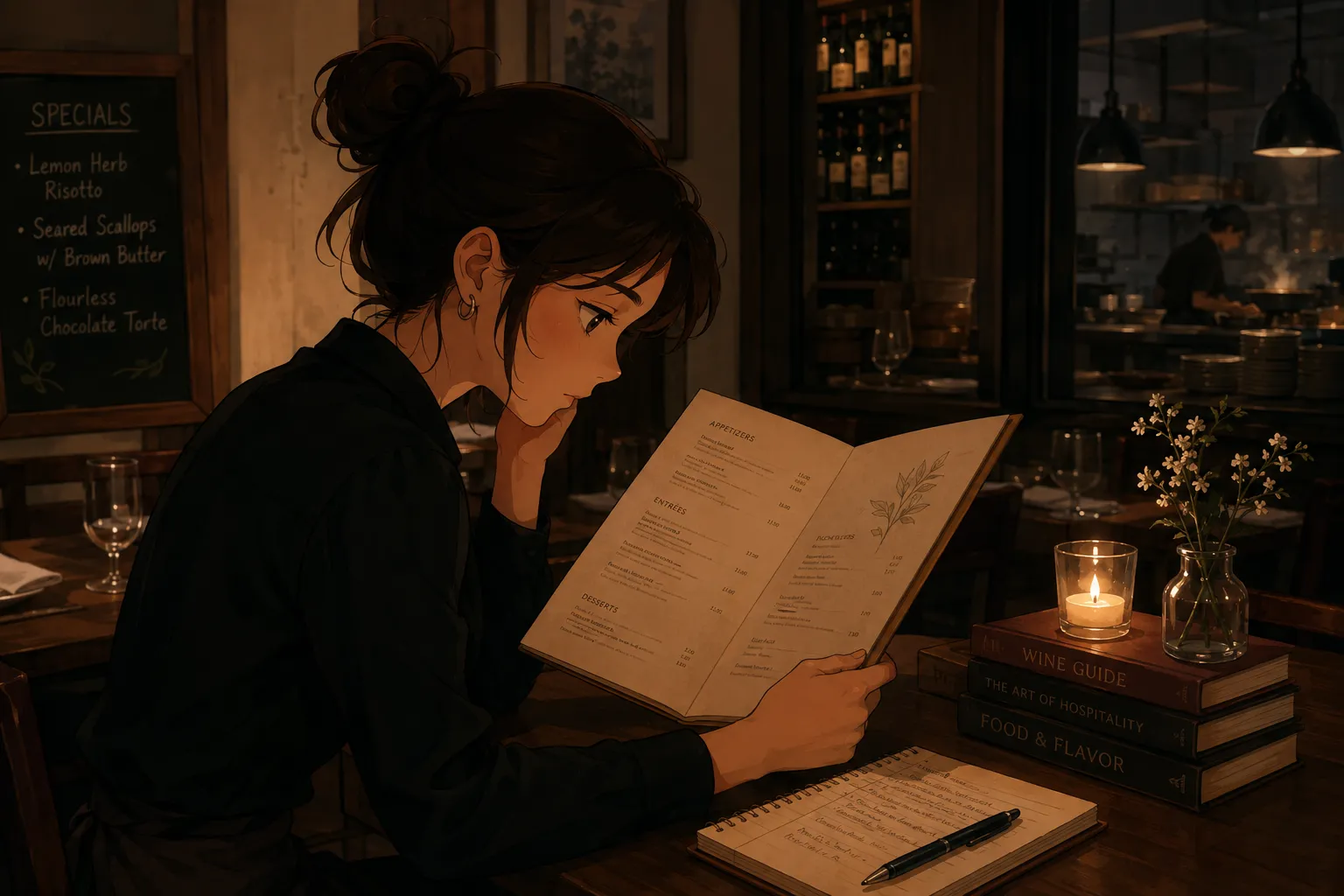
If you hate writing flashcards, the good news is you no longer have to: an app can make them for you from a photo of the menu. You point your phone at the menu, and it becomes a deck of cards with the dishes, ingredients, and allergens already sorted, so the part you dread is gone and you can go straight to studying. A tool like MenuFlashcards does exactly this. It is in early access on iPhone.
If the no-typing part is what you care about, see a flashcard app with no typing for servers and turning a photo into flashcards instead of typing them.
Yes, an app can make the flashcards for you
The whole reason people hate flashcards is the making, not the studying. Handwriting a hundred dishes, or rebuilding a menu card by card in Quizlet, eats an evening before you learn a thing, which is enough to make anyone quit. An app removes that step: photograph the menu and the deck appears in minutes, organized into sections, ingredients, and allergens. You skip straight to the part that actually teaches you the menu.
But doesn’t writing them by hand help you learn?
A little, and it is worth being honest about that. Research has found that writing notes by hand can aid recall more than typing, because writing forces you to condense ideas. But that small encoding boost is not the main event. The thing that actually fixes a menu in memory is testing yourself, and a review of the testing effect in the US National Library of Medicine found that retrieving an answer from memory beats any kind of review, including rewriting. You keep the part that matters even when the app makes the cards.
What you actually keep when you skip the writing
When the app makes the cards, you lose almost nothing and gain the hours back. You still quiz yourself, still cover the answer and say the dish out loud, still review the ones you miss more often. That active recall is the studying that works, and it is fully intact. What you lose is the handwriting, the lost cards, and the evening spent copying. For most people that is the easiest trade they will ever make.
What each card needs
Whether you write them or an app does, a good menu card holds what the table asks:
| To recall | Example |
|---|---|
| Name | Margherita pizza |
| Key ingredients | Tomato, mozzarella, basil |
| Allergens | Gluten, dairy |
| Sides or pairing | Side salad, a light red |
| Note | Can be made vegan on request |
Quiz from the dish name and produce the rest, because that is how the order arrives.
Why this matters most for a menu
Menus are the worst possible thing to handwrite, because they change. Specials rotate, prices move, and items get added, so a stack of handwritten cards is out of date within weeks and you are back at the table rewriting. An app fixes this with a new photo: the deck updates in a minute. The thing you hate most about flashcards, redoing them, is exactly the thing a photo-based app removes.
Space the studying, not the writing
With the writing gone, put your time into spaced study instead. Research on the spacing effect shows the same practice sticks far better spread across short sessions than packed into one block. Three ten-minute rounds across a couple of days beat one long sitting, so build the deck once and run quick quizzes leading up to your shift or test.
A worked example
Take a Margherita pizza. The version you hate: handwrite a card, then another, then ninety-eight more before you have studied a thing. The version that works: photograph the menu, and that pizza is already a card reading tomato, mozzarella, basil, with gluten and dairy flagged. You cover the answer, say it out loud, then check and swipe to the next. Same studying, none of the writing, and when the kitchen swaps in a seasonal pizza you re-photograph instead of starting the stack over.
A plan if you hate making cards
- Photograph the menu and let the app build the deck; fix any misreads.
- Skip straight to quizzing, do not reread the menu.
- Cover the answer, say the dish and its allergens out loud, then check.
- Review the ones you miss more often than the ones you know.
- Space short rounds across a few days, and re-photograph when the menu changes.
Bottom line
If you hate writing flashcards, an app that makes them from a menu photo removes the only part worth hating, the making, while keeping the part that works, the active recall. You lose a tiny handwriting boost and gain your evening and a deck that updates itself. MenuFlashcards builds that deck from a photo, so you study instead of copy. It is in early access, so join the list and start with the free deck when it opens.